Research

Biocultural diversity

People travel to the most biodiverse places in the world to find charismatic wildlife, such as lions and tigers. People also travel to admire the world’s majestic heritage sites to learn about past civilizations and enjoy modern culture, for example by experiencing archaeological sites and music festivals.

Several developing countries, including Colombia, are betting on tourism as the sector that brings the most opportunities for sustainable development, building upon its biodiversity and rich cultural heritage.

We are working with local governments and communities, characterizing and assessing options with a multidisciplinary team of academics and practitioners, and inspiring with a clear basis for planning and achieving a future that conserves, celebrates, and supports livelihoods and a tourism economy based on the richness of nature and culture. We are answering applied questions such as: where are the places with the highest potential for birdwatching and other wildlife viewing? Where are the places with the highest potential for cultural experiences of different sorts? Where and how do these opportunities coincide? Can we develop a metric for biocultural diversity that maps both culture and biodiversity?

Team members are diverse and we have researchers and cultural practitioners who are trained as musicians, anthropologists, biologists, spatial analysts, and lawyers.


  • Echeverri, et al. (2025). Toward sustainable biocultural ecotourism: An integrated spatial analysis of cultural and biodiversity richness in Colombia. People and Nature, 7(1), 194-214.
  • Mateus-Aguilar, Díaz-Salazar, et al. (2025). Assessing Biocultural Diversity Across Scales Using Ecological Indicators. Ecological Indicators, 176, 113616.
  • Hernandez, et al. (2024). Nearly half of Colombian artisan craft plant species lack national and international vulnerability assessments. Ecosystems and People, 20(1), 2420080.

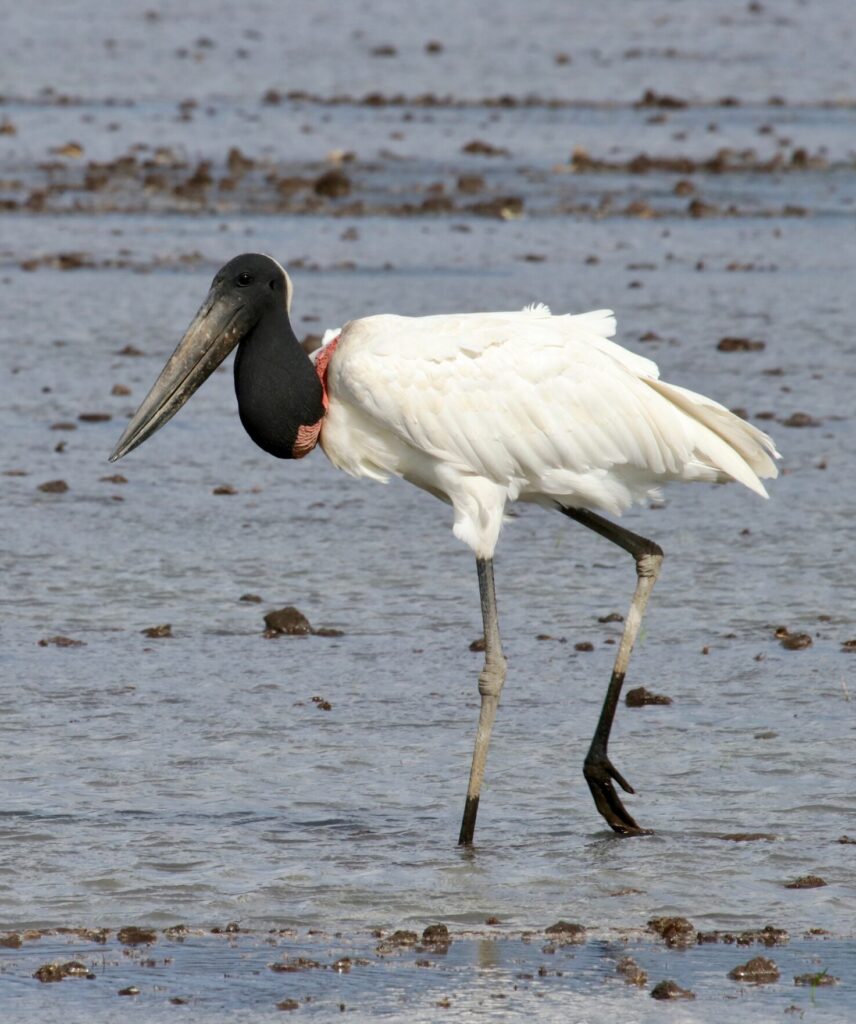
Photo by: Robinson Manuel Ruz Sampayo

Human dimensions of wildlife

People can help halt biodiversity loss by donating to conservation programs and by advocating for policies that help promote the protection of biodiversity.

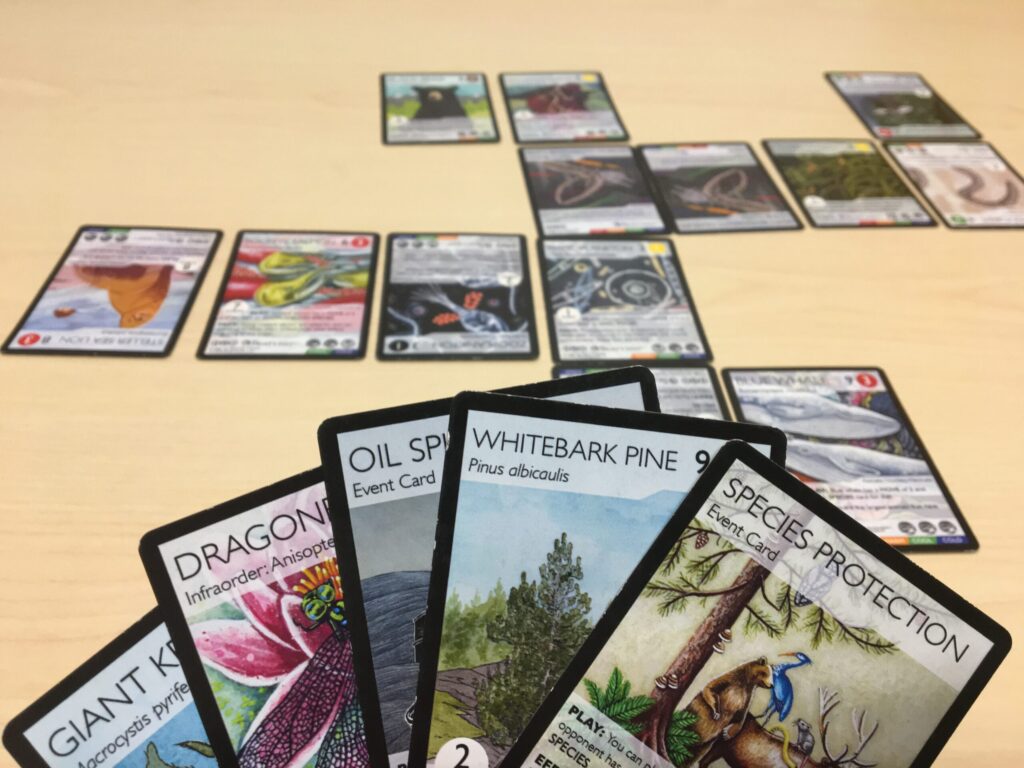
Our research in this area has explored people’s motivations, perceptions, and attitudes towards wildlife. Answering: what motivates people to donate to conservation of species and ecosystems? Can we use persuasive communication to increase conservation-motivated actions? And, are games effective tools to raise awareness on biodiversity?

We have also studied the factors that shape people’s attitudes towards wildlife, such as culture and history, and have collaborated with scholars in various fields (English, Psychology, Anthropology) to explore the human dimensions of wildlife. 

Currently we have active projects looking at the role of conservation and cognition messages for zoo displays, and the role of environmental documentaries and reality tv series in shaping public attitudes towards wildlife and conservation.

  • Echeverri, et al. (2017). How messaging shapes attitudes toward sea otters as a species at risk. Journal of Human Dimensions of Wildlife.
  • Echeverri, et al. (2018). Approaching human-animal relationships from multiple angles: A synthetic perspective. Biological Conservation
  • Dinat, Echeverri, et al. (2019). Eco-xenophobia among rural populations: The Great-tailed Grackle as a contested species in Guanacaste, Costa Rica. Journal of Human Dimensions of Wildlife.

Source: UBC

Biodiversity and environmental change

Tropical biodiversity is impacted by various human activities. For example, people convert forests to commodity-oriented agriculture, and are warming the climate at unprecedented rates. The new environments that are being created, such as a warmer climate and degraded and deforested landscapes are shaping the patterns of species richness and distribution we see on the landscape. 

Our research in this area has explored which species thrive in gradients of intensive food production zones, versus which are limited to intact forests. We also study how diversity patterns will change in the future if trends of deforestation and climatic extremes keep occurring.

  • Echeverri, et al. (2019). Precipitation and tree cover gradients structure avian alpha diversity in North-western Costa Rica. Diversity and Distributions.
  • Karp, Frishkoff, Echeverri, et al. (2018). Agriculture erases climate-driven ß-diversity in Neotropical bird communities. Global Change Biology.
  • Frishkoff, Echeverri, et al. (2018). Do correlated responses to multiple environmental changes exacerbate or mitigate species loss? Oikos
  • Karp, Echeverri, et al. (2019). Remnant forest in Costa Rican working landscapes fosters bird communities that are indistinguishable from protected areas. Journal of Applied Ecolo

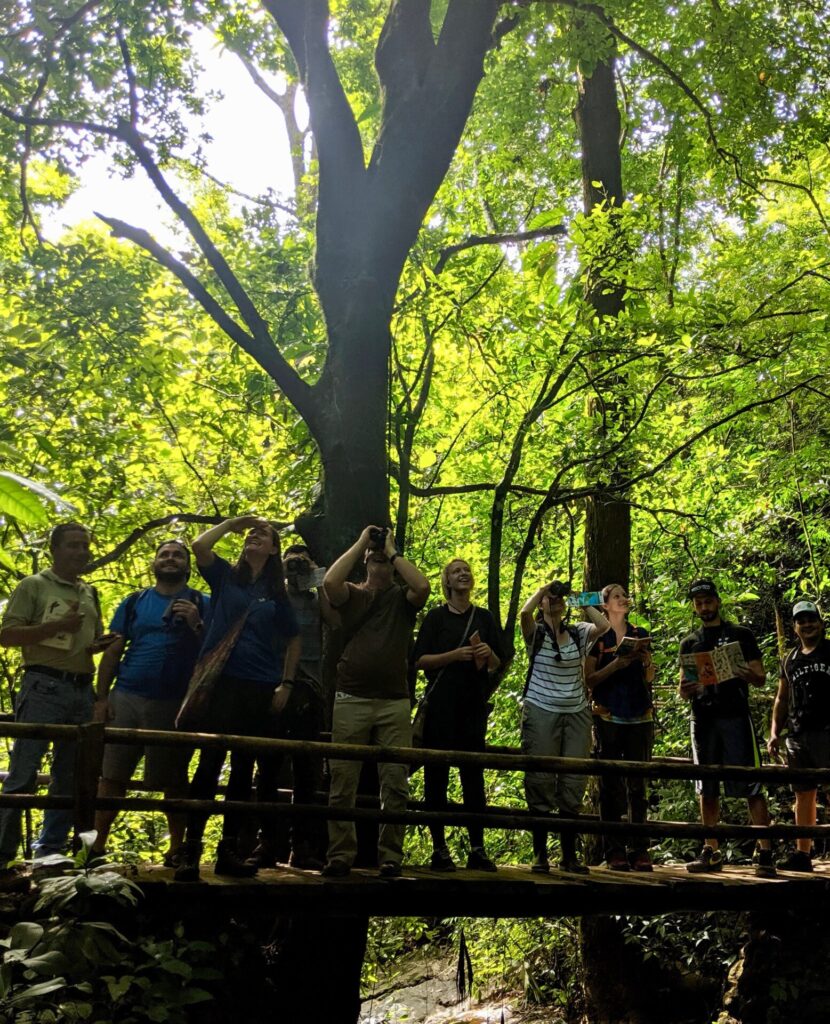
Photo: Daniel S. Karp

Coupled human-natural systems

Unless we understand that social and ecological issues are inextricably entangled, we will fail to come up with long term and sustainable solutions. For that reason, my research in this area couples the ecological with the social dimensions of biodiversity conservation.

I am interested for example in understanding what kinds of cultural values of animals we risk losing in the face of climate change and deforestation. Also, what kinds of agricultural practices can enhance both the benefits that people derive from birds (such as pest control) and promote the birds that people find the most beautiful and important.

Selected publications:

  • Echeverri, Smith. et al. (2022). Biodiversity and infrastructure interact to drive tourism to and within Costa Rica. PNAS.
  • Echeverri, et al. (2021). Avian cultural services peak in tropical wet forests. Conservation Letters
  • Echeverri, et al. (2020). Can avian functional traits predict cultural ecosystem services? People and Nature
  • Smith, Taylor, Echeverri, et al. (2021). Big wheel keep on turnin’: Linking grower attitudes, farm management, and delivery of avian ecosystem services. Biological Conservation

Photo: Daniel S. Karp